


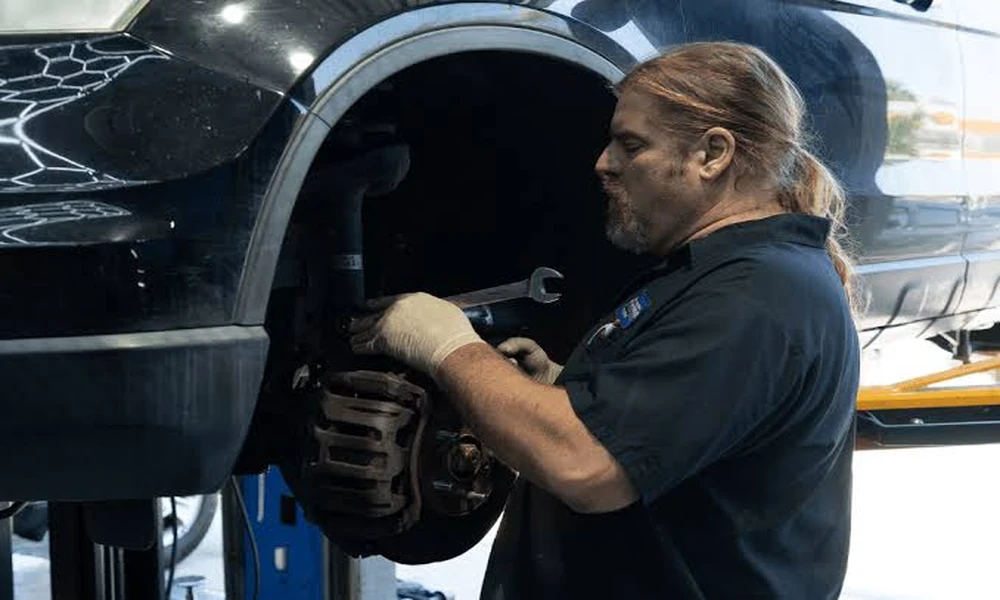
The complex suspension system keeps your tires on the road. The system handles huge forces during a drive. Most drivers know about shock absorbers. But many drivers overlook suspension geometry. These components work together constantly. They control the vehicle movements perfectly. The services from Auto repair in Salem, OR influences this intricate mechanical relationship deeply. The dampers manage vertical movement. Meanwhile, the geometry controls alignment angles. This partnership dictates vehicle handling quality. Brock Automotive designs components to optimize this exact interaction. Proper setup ensures safety on bumpy roads.
Understanding the Core Dynamics
Suspension geometry defines the spatial orientation of mechanical components. The layout dictates how the wheel moves under load. Sometimes, the wheel tilts inward during a hard turn. This movement changes the contact patch of the tire. The shock absorber controls the speed of this motion. A worn damper allows excessive body roll. Consequently, the suspension geometry changes too quickly. The car loses optimal tire grip. Brock Automotive engineers suspension parts for precise control. A stable geometry keeps the vehicle stable. Drivers feel more confident behind the wheel.
The Impact on Camber and Caster
Camber angle describes the inward or outward tilt of wheels. Caster angle measures the forward or backward steering axis tilt. Both angles change dynamically as the vehicle moves. The shock absorber regulates these rapid shifts. Now, imagine hitting a large bump at high speed. The shock absorber compresses to absorb the energy. A good damper limits extreme alignment changes. It preserves the ideal tire position. This action prevents uneven tire wear over time. It also maintains predictable steering responses.
Toe Angles and Dynamic Control
Toe alignment refers to the direction tires point. Tires can point inward or outward slightly. Acceleration and braking forces alter this alignment. The dampers absorb the harsh initial impacts. They prevent sudden toe variations during hard braking. Consistent toe angles keep the car tracking straight. Without proper damping, the car darts unpredictably. Drivers must correct the steering wheel constantly. This issue increases driver fatigue significantly. Good shock absorbers eliminate this annoying problem completely.
The Role of Control Arms and Links
Control arms connect the wheel hub to the frame. These arms move up and down on rubber bushings. The shock absorber mounts directly to these arms frequently. This mounting point dictates the leverage ratio. A stiffer damper alters the effective suspension stiffness. It modifies the load path through the metal links. Brock Automotive manufactures robust control arms for high performance. The links must withstand massive dynamic forces. Strong parts maintain correct geometric alignment under load. The vehicle tracks perfectly through sharp corners.
