


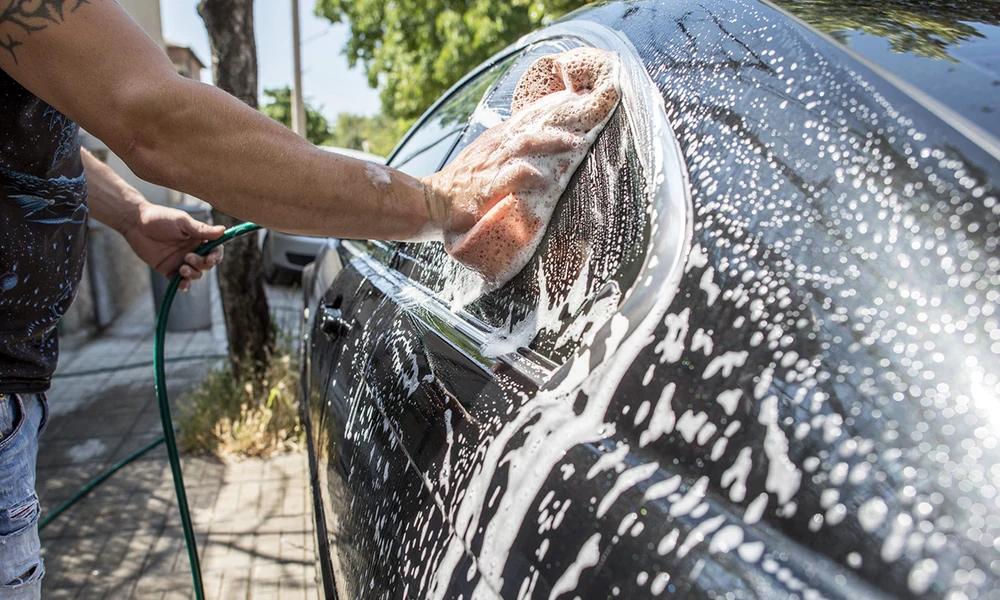
Most drivers think of washing a car as a cosmetic chore – something you do before a road trip or when the neighbors start to notice. But the paint and clear coat on a vehicle are thin, and they’re under constant low-grade attack from the moment the car leaves the factory. Sun, salt, tree sap, and even the water used to rinse the car off all play a role in how long the paint stays glossy and how well the metal underneath resists rust.
So how often should you actually wash your car? The honest answer is “it depends,” but not in a vague way. Once you understand what a wash is actually protecting against, the right frequency for your specific situation becomes fairly easy to figure out.
What a Wash Is Actually Protecting
The clear coat is the outer layer that shields your paint and the metal underneath from sun, air, and moisture. On its own, it holds up reasonably well. But contaminants change the equation. Bird droppings and tree sap are acidic and can etch into the finish within days in hot weather. Road grime and brake dust contain fine particles that can embed in the surface and contribute to scratching every time the car is touched or brushed against. Bug residue is similarly acidic and tends to bond quickly once it bakes in the sun.
None of this happens overnight, which is exactly why it’s easy to underestimate. A car that looks “fine” from ten feet away can already have contaminants sitting on the surface that are quietly working against the clear coat. Regular washing isn’t about vanity – it’s about interrupting that process before it becomes permanent damage.
How Often You Should Wash Your Car
For an average vehicle in a moderate climate, washing every one to two weeks is a sensible baseline. That interval is frequent enough to keep contaminants from accumulating and infrequent enough that it won’t wear down the surface through excessive handling. From there, the right frequency shifts based on a handful of practical factors:
- Parking situation. A car that sleeps in a garage collects far less pollen, dust, and bird activity than one parked under a tree or on the street.
- Driving environment. Highway commuters pick up more road film and insect residue; drivers on gravel or rural roads deal with heavier dust and mud.
- Climate and coastal exposure. Salt air along the coast accelerates corrosion, and humid regions tend to trap airborne pollutants against the paint longer.
- Season. Late spring brings pollen and tree sap; summer brings bug splatter and intense UV exposure; winter brings road salt and de-icing chemicals, which are arguably the single biggest threat to the underbody and lower panels.
Delaware’s mix of coastal humidity, salted winter roads, and heavy pollen seasons means most vehicles here fall on the more frequent end of that range for at least part of the year.
Washing in Winter
Road salt and de-icing brine are worth calling out on their own, because their damage is largely invisible until it isn’t. Salt-laden water splashes up into wheel wells, brake lines, and the undercarriage, where it can sit against bare metal for weeks. AAA has advised drivers to wash their vehicles at least every two weeks during winter months, with more frequent washes after driving on heavily treated roads, and to specifically seek out a wash with an underbody rinse. That last detail matters – a wash that only addresses the visible body panels can miss the area where corrosion actually starts.
Where the Wash Water Goes
There’s a piece of this that doesn’t get talked about enough: where the wash water actually goes. Washing a car in the driveway sends soap, oil residue, and heavy metals from brake dust straight into the nearest storm drain, and storm drains generally flow untreated into local waterways. The EPA’s stormwater program identifies vehicle washing as one of the more common sources of this kind of runoff pollution, largely because most people don’t realize the connection between their driveway and the creek down the street.
This is part of why commercial and mobile detailing setups typically use water reclamation, containment mats, or biodegradable soaps – not just for compliance, but because it’s a more responsible way to handle the water in the first place. If you’re washing at home, using a car-specific soap and directing runoff toward a lawn or gravel area instead of a paved surface makes a meaningful difference.
Signs You Shouldn’t Wait
A calendar-based schedule is a good starting point, but it shouldn’t override what’s actually happening on the surface. A few signals worth acting on immediately rather than waiting for the next scheduled wash:
- Bird droppings or sap spots that have been sitting for more than a day or two, especially in direct sun
- A gritty texture when you run a hand across the lower panels – often a sign of embedded salt or road film
- Water that no longer beads on the hood, which usually means the wax or sealant layer has worn thin
- Visible dust that’s been rained on and dried, since that combination tends to leave mineral deposits behind
Can You Wash Too Often?
Frequency matters less than technique. Washing weekly with the wrong approach – dish soap, a dirty sponge, or automatic washes with abrasive brushes – does more harm than washing every three weeks with the right tools and a two-bucket method. The goal isn’t to minimize washing; it’s to make sure every wash is actually protecting the paint rather than adding fine scratches to it.
This is also where the difference between a quick rinse and an actual detail comes in. Routine washing removes surface-level dirt, but it doesn’t address embedded grime, dulled paint, or a wax layer that’s already worn off. Many owners handle regular washing themselves and bring in an exterior detailing service every few months to remove buildup the wash misses, smooth out light scratches, and reapply a protective sealant or wax. That combination tends to do more for the paint’s long-term condition than either approach alone.
Finding the Right Routine
There’s no single number that applies to every car and every driver. A garage-kept sedan in a mild, dry climate might genuinely be fine with a wash every three to four weeks. A daily-driven truck parked outside through a Mid-Atlantic winter is a different story entirely. The practical approach is to start with that one-to-two-week baseline, adjust based on your parking situation and the season, and treat visible warning signs – sap, droppings, gritty panels – as reasons to move the schedule up rather than wait.
For drivers who’d rather not build an at-home wash station or haul the car to a bay, mobile services like Diamond State Mobile Detailing bring the process to the driveway, which tends to make the “every couple of weeks” habit a lot easier to actually keep. Whatever the method, the underlying idea stays the same: a clean car isn’t just a nicer car to look at – it’s one that’s been given a real chance to keep its paint and finish intact for the long haul.
